



Hello, I’m Tony from Keystone Comfort Solutions. In my 30 years as a heating engineer here in Epsom, there’s one term that I’ve seen make homeowners more nervous than any other: “powerflush.” It sounds big, disruptive, and expensive. People often worry it’s an unnecessary upsell, a way for engineers to pad out a bill.
So, let’s have a straightforward chat about it. My promise in this guide is to pull back the curtain and give you an honest look at what a powerflush is, why it’s sometimes needed, and most importantly, to help you figure out if it’s genuinely the right solution for your home. This isn’t about selling you a service, it’s about giving you the knowledge to make an informed decision about the health of your heating system and to prevent frozen pipes.
What is This ‘Sludge’ in My Heating System?
To understand why a powerflush is sometimes necessary, you first need to understand the root of the problem: a thick, black, mud-like substance we call ‘sludge’. Where does this gunk come from? It’s the result of a simple, natural process. Your central heating system – your boiler, pipes, and radiators – is made of different metals. When water is present with these metals, a very slow process of corrosion begins. Over many years, tiny particles of rust and other metallic debris flake off and get suspended in the water circulating through your system.
This isn’t clean water anymore; it’s a sludgy, often magnetic, abrasive mixture. Because this sludge is heavier than water, it tends to settle and build up in the areas of lowest flow, like the bottom of your radiators and, crucially, in the narrow waterways of your boiler’s most delicate and expensive components, like the heat exchanger and the pump. This sludge is the number one enemy of a healthy, efficient heating system.
The Symptoms: 6 Telltale Signs Your System is Crying Out for a Clean
Your heating system is usually very good at telling you when it’s getting clogged up. You just need to know what to look and listen for. If you’re experiencing several of the following symptoms, it’s a very strong indicator that you have a significant sludge problem.
- Symptom #1: Cold Spots on Your Radiators (Especially at the Bottom)
This is the classic, textbook symptom. You touch a radiator, and the top half is warm, but the bottom half is lukewarm or even stone cold. This is because the heavy sludge has settled at the bottom, creating a physical barrier that prevents the hot water from circulating through the entire radiator. - Symptom #2: Some Radiators Not Heating Up At All
If one or two radiators in your home, often the ones furthest from the boiler, refuse to get hot no matter how much you bleed them, it’s a sign that the pipes leading to them, or the radiators themselves, are severely blocked. - Symptom #3: Noisy Boiler or Radiators
Are you hearing strange noises? A boiler that’s ‘kettling’ (a low rumbling or banging sound) is often a sign that sludge is causing hotspots on the heat exchanger. Loud clanking or gurgling from your pipes and radiators can also be a sign of restricted flow caused by blockages. - Symptom #4: Your Boiler Keeps Shutting Down
A boiler that keeps locking out and needing to be reset is a common sign of a struggling system. Often, this is because the pump is straining to push water through the blocked pipework, causing the boiler to overheat and shut down for safety. - Symptom #5: Discoloured Water When You Bleed a Radiator
When you bleed a radiator, the water that comes out after the initial hiss of air should be relatively clear. If it’s black, brown, or sludgy, you are seeing the direct evidence of the corrosion and sludge that is circulating within your system. - Symptom #6: Your Heating Takes a Very Long Time to Warm Up
If it feels like your home is taking longer and longer to get warm when the heating clicks on, it’s because the boiler is having to work much harder to heat the sludgy water and then struggle to pump it around a restricted system.
What is a Powerflush? A Step-by-Step Look at the Process
A powerflush is far more than just draining and refilling your system. It’s a deep-cleaning process that uses a high-velocity flow of water to dislodge and remove the sludge, limescale, and debris that have built up over years.
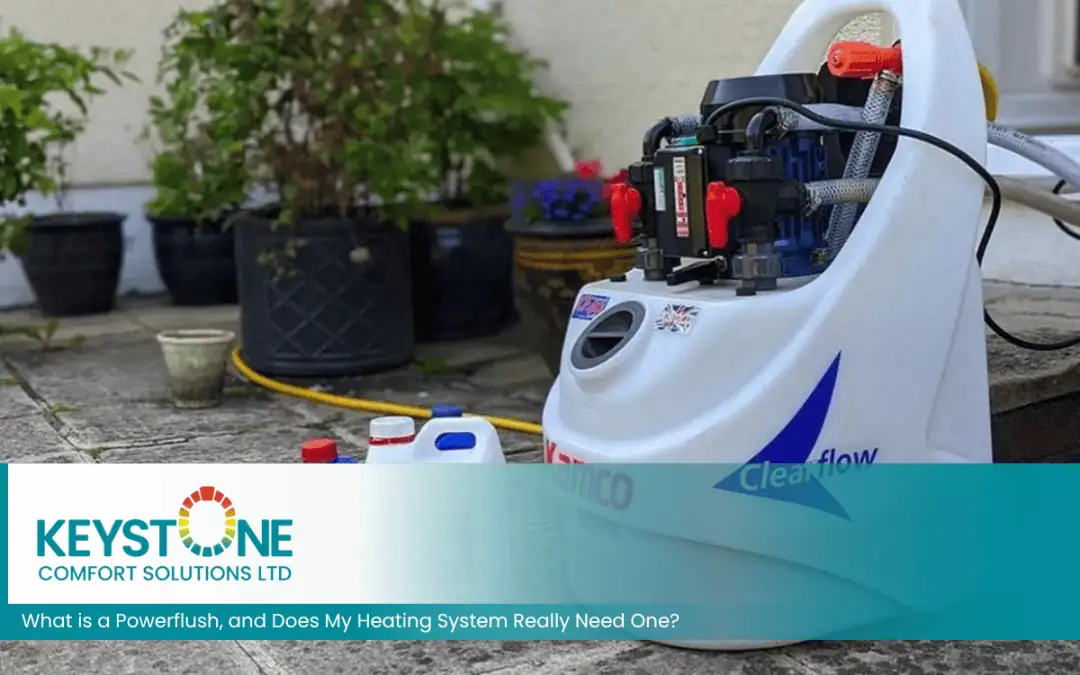
- Step 1: Connecting the Powerflushing Machine: First, we lay down dust sheets to protect your home. Then, we connect a powerful, purpose-built powerflushing machine to your central heating system, usually at the point where one of your radiators is, or at the boiler itself.
- Step 2: Pumping and Cleaning: We begin pumping water through your entire system at a very high velocity but at a low, controlled pressure (so it’s safe for your pipework). We add powerful, sludge-busting cleaning chemicals to the water to help break down the stubborn deposits.
- Step 3: Focusing on Each Radiator: This is the crucial part. We close off all but one radiator and direct the full force of the flow through that single radiator. We also use a special tool to agitate the radiator, helping to dislodge the heavy sludge at the bottom. We repeat this process for every single radiator in your home.
- Step 4: Flushing Until the Water Runs Clean: We continue to flush the system, diverting the dirty water to an outside drain. We have a special magnetic filter on the machine that captures the metallic sludge, and we keep flushing until the water coming back from your system is completely clear.
- Step 5: Adding a Chemical Inhibitor: Once the system is clean, we refill it with fresh water and add a high-quality chemical inhibitor. This is a vital final step. This chemical solution remains in your system and coats the metal surfaces, helping to prevent the corrosion process from starting all over again.
The Real, Tangible Benefits of a Clean System
A powerflush isn’t just about fixing problems; it’s about restoring your heating system to its full potential. The benefits are significant:
- Hotter Radiators: Your radiators will heat up faster and get hot all over, making your home feel much warmer and more comfortable.
- Lower Energy Bills: A clean system is a more efficient system. Your boiler won’t have to work as hard, and the heat will be transferred more effectively, which can lead to a noticeable reduction in your gas bills.
- A Quieter System: By removing the blockages and restrictions, you’ll often find that those annoying noises from your boiler and pipes disappear.
- Increased Lifespan: Sludge is abrasive and puts a huge strain on your boiler’s pump and heat exchanger. By removing it, you are drastically increasing the potential lifespan of these expensive components.
Are There Alternatives to a Full Powerflush?
Yes, a powerflush isn’t the only option. A good engineer will recommend the right solution for your specific situation.
- The “Chemical Flush”: For newer systems or those with only a mild sludge problem, a full powerflush might be overkill. In these cases, we can perform a “chemical flush,” where we add a cleaning agent to the system, let it circulate for a period, and then drain and refill the system. It’s less disruptive and less expensive, but also less powerful.
- Magnetic System Filters: This is the ultimate form of prevention. A magnetic filter is a device we fit to your pipework that catches the sludge before it can enter and damage your boiler. If you’re having a new boiler installed, fitting one of these is an absolute must. For an existing system, it’s the best way to keep it clean after a flush.
So, Does My System
This is the key question. The honest answer is that not every system does, and you should be wary of any engineer who recommends one without a proper diagnosis.
- When It’s Essential: It is an absolute must-do before you have a brand new, high-efficiency boiler installed onto an old radiator system. All boiler manufacturers state that their warranty is void if the boiler is damaged by pre-existing sludge. Installing a new boiler onto a dirty system is like putting a new engine in a car but leaving the old, dirty oil in it – it’s a recipe for disaster.
- When It’s Highly Recommended: If your system is showing several of the 6 symptoms listed above, then a powerflush is highly recommended to restore its health and efficiency.
- When It Might Not Be Suitable: For very old systems (30+ years) with very fragile pipework and radiator joints, a powerflush could potentially expose existing weaknesses and cause leaks. In these rare cases, a careful assessment is needed.
Our Honest Assessment at Keystone Comfort Solutions
My promise to you is simple: we will never recommend a powerflush if you don’t need one. Our process always begins with an honest assessment. We can take a sample of your system water to test its quality and talk you through the symptoms you’re experiencing. If a flush is the right solution, we’ll provide a clear, fixed-price quote with no hidden extras. Our goal is to solve your problem effectively and earn your trust for the future.
Frequently Asked Questions from Surrey Homeowners
How long does a powerflush take?
It depends on the size of your system and how badly sludged it is, but you should typically allow at least half a day to a full day for a thorough and professional job.
Is it a messy job?
When done correctly by a professional, it shouldn’t be. We use dust sheets to protect your home, and the entire process is self-contained within the machine and your heating circuit.
How much does a powerflush cost in Surrey?
Typically £350–£600 depending on your home size and number of radiators. In Surrey, the cost of a professional powerflush usually ranges between £350 and £600, with the exact price depending on how many radiators you have and how badly the system is clogged. A small flat may be at the lower end, while a large family home with 12+ radiators could be at the higher end. While it’s a significant investment, the savings on energy bills and the protection it gives your boiler often mean it pays for itself over time.
Can a powerflush damage old pipes or radiators?
It’s rare, but very old or fragile systems can sometimes reveal leaks after a flush. A correctly performed powerflush is safe for most modern heating systems, but in very old setups with weak or corroded joints, the cleaning process can expose existing weaknesses that were previously hidden by sludge. In practice, this means a small leak might appear if the pipework or radiator was already compromised. This is why a professional heating engineer will assess the age and condition of your system before recommending a full powerflush, and in rare cases, suggest gentler alternatives instead.
Does a powerflush save money on heating bills?
Yes, a cleaner system runs more efficiently, cutting heating costs. By removing sludge and restoring full water flow, a powerflush allows your boiler and radiators to work as efficiently as they were designed to. Hot water can circulate freely, radiators heat evenly, and the boiler doesn’t have to overwork, which means less gas is used to heat your home. Many homeowners notice their heating warms up faster and their gas bills drop after a flush, making it a cost-saving investment as well as a preventative measure against breakdowns.
Is a chemical flush cheaper than a powerflush?
Yes, a chemical flush costs less but is also less thorough. A chemical flush is generally more affordable than a full powerflush because it involves circulating cleaning chemicals through your system at normal pump pressure, without the high-velocity machine. It’s a good option for newer systems with only light sludge or as ongoing maintenance, but it won’t be strong enough to clear heavily blocked radiators or pipework. A heating engineer will recommend the right option for your home based on water tests and system condition.
Will a magnetic filter stop me ever needing a powerflush again?
No, but it helps prevent future sludge build-up and extends system life. A magnetic filter is one of the best preventative tools you can fit, as it continuously captures the metallic sludge particles circulating in your heating system before they reach your boiler. While it won’t remove existing sludge, it dramatically slows down future build-up, meaning you may never need another powerflush if the system is cleaned first and then protected. For this reason, many engineers recommend fitting a filter immediately after a flush or whenever a new boiler is installed.
Recent Comments